The expression “du/ds” is a cornerstone in the realm of thermodynamics, representing the rate of change of internal energy (u) with respect to entropy (s). While it might seem abstract at first glance, this derivative holds profound implications for understanding the behavior of systems from microscopic particles to macroscopic phenomena. In this article, we will delve into the intricacies of du/ds, exploring its physical significance, mathematical representation, and applications across various fields.
The Concept of Internal Energy and Entropy
Before diving into the derivative, let’s establish a solid foundation by understanding the core concepts of internal energy and entropy.
Internal Energy (u)
Internal energy is the total energy contained within a system due to the motion and interaction of its constituent particles. It encompasses various forms of energy, including kinetic energy (associated with motion), potential energy (due to position or configuration), and vibrational energy.
Entropy (s)
It quantifies the number of microstates (microscopic arrangements) corresponding to a given macrostate (observable properties). Entropy tends to increase over time in isolated systems, reflecting the natural tendency towards disorder.
The Derivative du/ds: A Thermodynamic Perspective
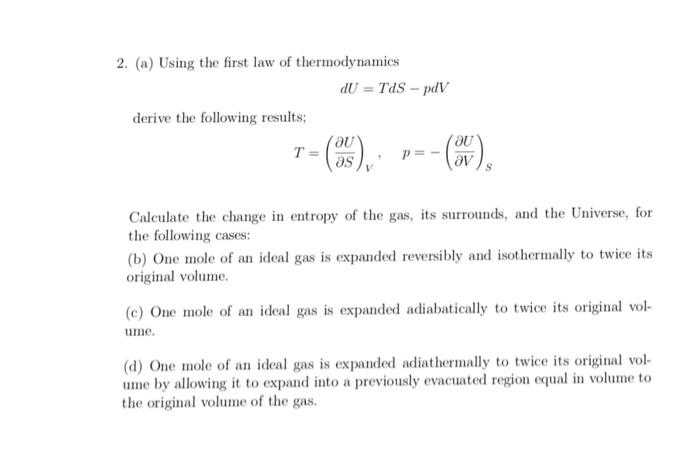
The derivative du/ds represents the change in internal energy as entropy changes while keeping other variables constant. Mathematically, it can be expressed as:
du/ds = T
This equation reveals a crucial relationship between internal energy, entropy, and temperature. It signifies that the rate at which internal energy changes with respect to entropy is equal to the absolute temperature. In other words, as the entropy of a system increases at constant conditions, its internal energy also increases, and the rate of increase is determined by the temperature.
Physical Interpretation of du/ds
To gain a deeper understanding of du/ds, let’s consider its physical implications:
- Temperature as a Measure of Energy Change: The equation du/ds = T indicates that temperature is a measure of how efficiently energy can be converted into work. A higher temperature implies a greater ability to perform work.
- Entropy and Energy Distribution: As entropy increases, the energy within a system becomes more dispersed or spread out among its particles. This distribution of energy limits the system’s ability to perform work.
- Second Law of Thermodynamics: The relationship between du/ds and temperature is consistent with the second law of thermodynamics, which states that the total entropy of an isolated system always increases over time.
Applications of du/ds
The concept of du/ds finds applications in various fields, including:
Thermodynamics
- Carnot Cycle: The efficiency of heat engines is analyzed using the concept of du/ds, leading to the derivation of the Carnot efficiency.
- Refrigeration and Heat Pumps: Understanding the relationship between internal energy, entropy, and temperature is crucial for designing efficient refrigeration and heat pump systems.
Statistical Mechanics
- Microscopic Interpretation of Entropy: du/ds provides insights into the connection between macroscopic thermodynamic properties and the microscopic behavior of particles.
- Partition Function: The partition function, a fundamental quantity in statistical mechanics, is related to the entropy and internal energy of a system, allowing for calculations of thermodynamic properties.
Material Science
- Phase Transitions: The behavior of materials during phase transitions (e.g., solid to liquid, liquid to gas) can be analyzed using concepts related to du/ds.
- Material Properties: Thermodynamic properties of materials, such as specific heat capacity and thermal expansion, are connected to du/ds.
Beyond the Basics: Advanced Concepts
While the equation du/ds = T provides a fundamental understanding, there are more complex scenarios where additional considerations are necessary:
- Open Systems: In systems that exchange matter and energy with their surroundings, the relationship between du/ds and temperature becomes more intricate.
- Chemical Reactions: For systems undergoing chemical reactions, the change in internal energy depends not only on entropy but also on other factors like enthalpy and Gibbs free energy.
- Irreversible Processes: Real-world processes often involve irreversibilities, which can affect the relationship between du/ds and temperature.
The derivative du/ds serves as a powerful tool for unraveling the complexities of thermodynamic systems. By understanding its physical significance and mathematical representation, we can gain insights into the behavior of matter and energy at both macroscopic and microscopic scales. From engineering applications to fundamental scientific research, the concept of du/ds continues to be a cornerstone in the field of thermodynamics.
FAQ’S
What is du/ds?
du/ds is a term in thermodynamics that represents the rate at which the internal energy (u) of a system changes with respect to its entropy (s). In simpler terms, it tells us how much the internal energy of a system increases when its entropy increases by a tiny bit.
Why is du/ds important?
Understanding du/ds is crucial because it helps us:
- Predict how systems will behave under different conditions.
- Analyze energy transfers and transformations.
- Develop new technologies and materials.
- Study the behavior of everything from atoms to planets.
What does du/ds physically represent?
Physically, du/ds is equivalent to the temperature (T) of the system. This means that as the entropy of a system increases at constant volume, the temperature also increases.
How is du/ds related to the first law of thermodynamics?
The first law of thermodynamics states that the change in internal energy (du) of a system is equal to the heat added to the system (dq) minus the work done by the system (dw). Mathematically, this is expressed as: du = dq – dw. When we consider a reversible process, dq = Tds, where T is temperature. Substituting this into the first law equation, we get: du = Tds – pdv. From here, we can derive the expression for du/ds at constant volume.
How is du/ds used in practical applications?
du/ds finds applications in various fields:
- Engineering: To design efficient engines, refrigerators, and heat pumps.
- Material science: To develop new materials with desired thermal properties.
- Climate science: To understand climate change and its impacts.
- Chemistry: To study chemical reactions and phase transitions.
Can you explain the concept of entropy in simpler terms?
Entropy is a measure of the disorder or randomness of a system. It’s like a measure of how spread out energy is. The higher the entropy, the more disordered the system.
How does du/ds relate to the concept of free energy?
Free energy is a thermodynamic property that combines enthalpy (total energy) and entropy. It helps predict the spontaneity of a process. du/ds is a component in calculating free energy changes.
What is the relationship between du/ds and the efficiency of a heat engine?
The efficiency of a heat engine is determined by the temperature difference between the hot and cold reservoirs. Since du/ds is related to temperature, it indirectly influences engine efficiency.
Can du/ds be negative?
Yes, du/ds can be negative under certain conditions. For example, in a system where the internal energy decreases as entropy increases, du/ds would be negative.
How does du/ds change with temperature?
The relationship between du/ds and temperature depends on the specific system and its properties. In general, as temperature increases, du/ds may also increase, but this is not always the case.
Are there any limitations to using du/ds?
While du/ds is a powerful tool, it has limitations. It applies primarily to equilibrium systems and reversible processes. Real-world systems often involve irreversible processes, which require more complex analysis.
How can I visualize du/ds?
You can visualize du/ds as the slope of a graph plotting internal energy (u) against entropy (s). The steeper the slope, the larger the value of du/ds (temperature).
To read more, Click here

