From ancient myths to modern science fiction, the idea of traversing time has been explored in countless stories and theories. While the notion of a time machine may seem like the stuff of fantasy, scientists and thinkers have pondered its possibility for decades. In this article, we will delve into the fascinating world of time travel, exploring various theories, potential challenges, and the implications that such a device could have on our understanding of the universe.
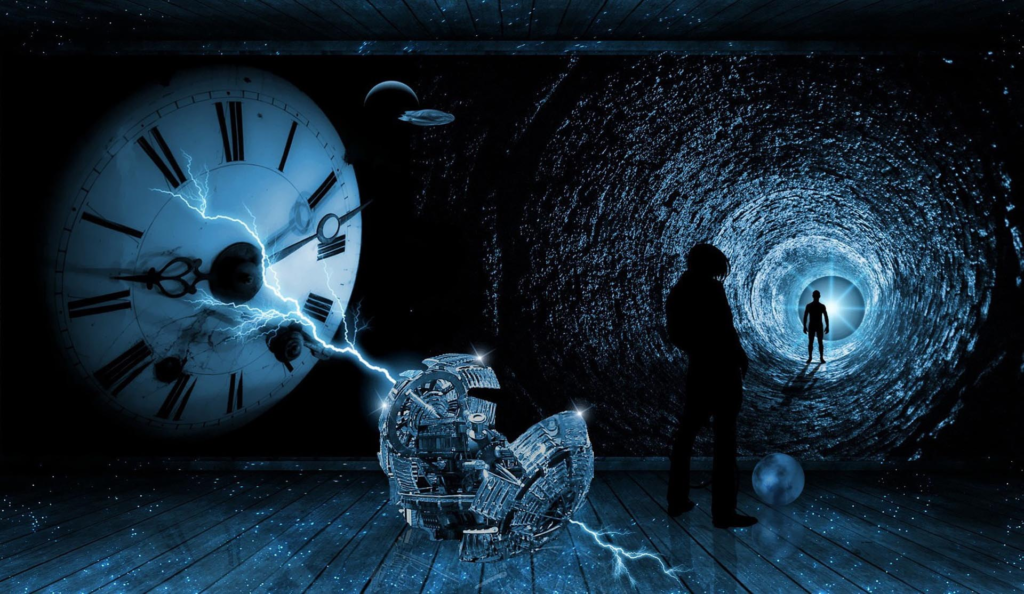
The Concept of Time Travel
Before we delve into the specifics of a time machine, it is essential to understand the fundamental concept of time travel. Time, as we perceive it, is a linear progression, flowing from the past to the future. However, the concept of time travel suggests that it might be possible to manipulate this flow, allowing us to move forward or backward in time.
There are two primary types of time travel:
- Forward Time Travel: This involves moving forward in time, skipping over periods that would normally pass. This is theoretically possible through relativistic effects, as experienced by astronauts traveling at near-light speeds.
- Backward Time Travel: This involves moving backward in time, returning to a point in the past. This is a much more complex and controversial concept, as it raises numerous paradoxes and logical inconsistencies.
Theoretical Approaches to Time Travel
Several theoretical approaches have been proposed for time travel. While none of these have been experimentally verified, they offer intriguing possibilities.
Wormholes:
- Definition: Wormholes are hypothetical tunnels through spacetime that could connect two distant points in the universe.
- Time Travel: If one end of a wormhole were moving at a significantly different speed than the other, it could create a time difference between the two ends. Traveling through the wormhole could potentially transport you to a different point in time.
Relativistic Time Dilation:
- Definition: This theory, based on Einstein’s theory of relativity, suggests that time passes slower for objects moving at high speeds or near massive objects.
- Time Travel: Traveling at near-light speeds or spending time near a black hole could potentially slow down time for the traveler relative to someone on Earth. This could create a scenario where the traveler returns to Earth in the future.
Tachyons:
- Definition: Tachyons are hypothetical particles that travel faster than the speed of light.
- Time Travel: Some theories suggest that tachyons could be used to send information or objects backward in time. However, the existence of tachyons is highly speculative and has not been confirmed.
Challenges and Paradoxes
The concept of time travel is fraught with challenges and paradoxes. Some of the most well-known paradoxes include:
Grandfather Paradox:
- Scenario: If you were to travel back in time and kill your grandfather before he met your grandmother, you would never have been born. This creates a logical inconsistency.
Bootstrap Paradox:
- Scenario: If you were to travel back in time and bring back a piece of technology that was originally invented in the future, it would create a circular causality. Where did the technology originally come from?
Predestination Paradox:
- Scenario: If time travel is possible, it suggests that all events are predetermined, and free will may be an illusion.
Implications of Time Travel
If time travel were ever to become a reality, it would have profound implications for our understanding of the universe and our place within it. Some of the potential consequences include:
- Altering History: Time travelers could potentially change the course of history, leading to unintended consequences.
- Economic and Social Disruption: Time travel could disrupt economies and societies, as people could travel back in time to exploit resources or avoid negative events.
- Ethical Dilemmas: Time travel raises numerous ethical questions, such as the implications for free will, causality, and the preservation of history.
Time Travel in Popular Culture
The concept of time travel has been a popular theme in science fiction literature, film, and television. From H.G. Wells’ “The Time Machine” to the “Back to the Future” trilogy, time travel has captured the imagination of audiences around the world. These stories often explore the ethical implications of time travel, as well as the potential consequences of altering the past.
While the idea of a time machine may seem like science fiction, the theoretical possibilities are intriguing and continue to fascinate scientists and the public alike. While there are significant challenges and paradoxes to overcome, the potential benefits of time travel are immense. As our understanding of the universe continues to evolve, it is possible that one day we may unlock the secrets of time travel and embark on a journey through the fabric of spacetime.

FAQ’S
Is a Time Machine Possible?
Yes, theoretically, a time machine could be possible. While we haven’t built one yet, the laws of physics don’t explicitly rule it out. Some scientists believe that by manipulating spacetime, we could potentially create a device capable of traveling backward or forward in time. However, the specific mechanisms and engineering challenges involved remain a subject of ongoing research and debate.
What Would Happen If You Traveled Back in Time and Killed Your Grandfather?
This is a classic thought experiment known as the grandfather paradox. If you were to travel back in time and kill your grandfather before he met your grandmother, you wouldn’t exist. But if you don’t exist, how could you have traveled back in time to kill your grandfather? This paradox presents a logical inconsistency that has puzzled scientists and philosophers for years. One possible explanation is that the universe would somehow prevent you from ever killing your grandfather, ensuring that the timeline remains consistent.
How Could a Time Machine Work?
There are several theoretical models for how a time machine might function. One popular idea involves creating a wormhole, a shortcut through spacetime. If we could create a stable wormhole, it might be possible to manipulate it so that one end travels through time while the other remains stationary. Another possibility is to use rotating black holes to create a region of spacetime known as an ergosphere. Objects within the ergosphere can be dragged along with the black hole’s rotation, potentially allowing for time travel.
What Would Be the Consequences of Time Travel?
Time travel could have significant consequences for the universe. It could create time paradoxes, such as the grandfather paradox, or lead to butterfly effects, where small changes in the past could have far-reaching consequences for the future. Additionally, time travel could have ethical implications, as it could raise questions about free will, causality, and the nature of reality.
Could Time Travel Be Used for Evil?
Yes, time travel could potentially be used for evil. For example, a person could use a time machine to travel back in time and change history to their advantage, leading to disastrous consequences. This raises important ethical questions about the potential dangers of time travel and the need for safeguards to prevent its misuse.
Are There Any Real-World Examples of Time Travel?
There is no definitive evidence of time travel, but there have been some speculative claims and anecdotal reports. For example, some people have claimed to have experienced deja vu or to have had premonitions of future events. However, these experiences can be explained by other factors, such as memory, coincidence, or psychological phenomena.
When Will We Have a Time Machine?
It is impossible to predict when or if we will ever develop a functional time machine. The technology required to manipulate spacetime is far beyond our current capabilities. However, as our understanding of the universe continues to grow, it is possible that we will one day discover a way to overcome these challenges.
To read more, Click here

